Households Clients for Financial Advisors
Clients with shared finances and shared goals.
Households Clients for Financial Advisors
Clients with shared finances and shared goals.
At a Glance
Project Name: “Household Tool: Unified Client Management”
| Challenge | Financial advisors lacked a standardized method to group related clients into "households." This forced manual workarounds and resulted in fragmented data, making it impossible to track accurate aggregate household assets or family-level insights. |
|---|---|
| Outcome | Developed a centralized household management system that automates the grouping of family members, providing advisors with a single, accurate view of total household wealth and relationships. |
| My Role | Lead UX Researcher |
| Timeline | 2 weeks per study, iterative over 1 Year & 3 Months. |
| Methods | Stakeholder Interviews, Discovery Research, Mental Model Mapping, Low fidelity Designs, Concept Testing |
| Impact | 93% Adoption within 3 months; Established the firm’s first accurate baseline for household data reporting. |

Business Context
Financial advisors help clients achieve their long-term goals by investing their assets.
A client is a Chase customer who invests their money with a Chase financial advisor.

Challenge: Develop a Household tool
The financial advisors manage households and we needed to develop a household tool for them.
The Quad
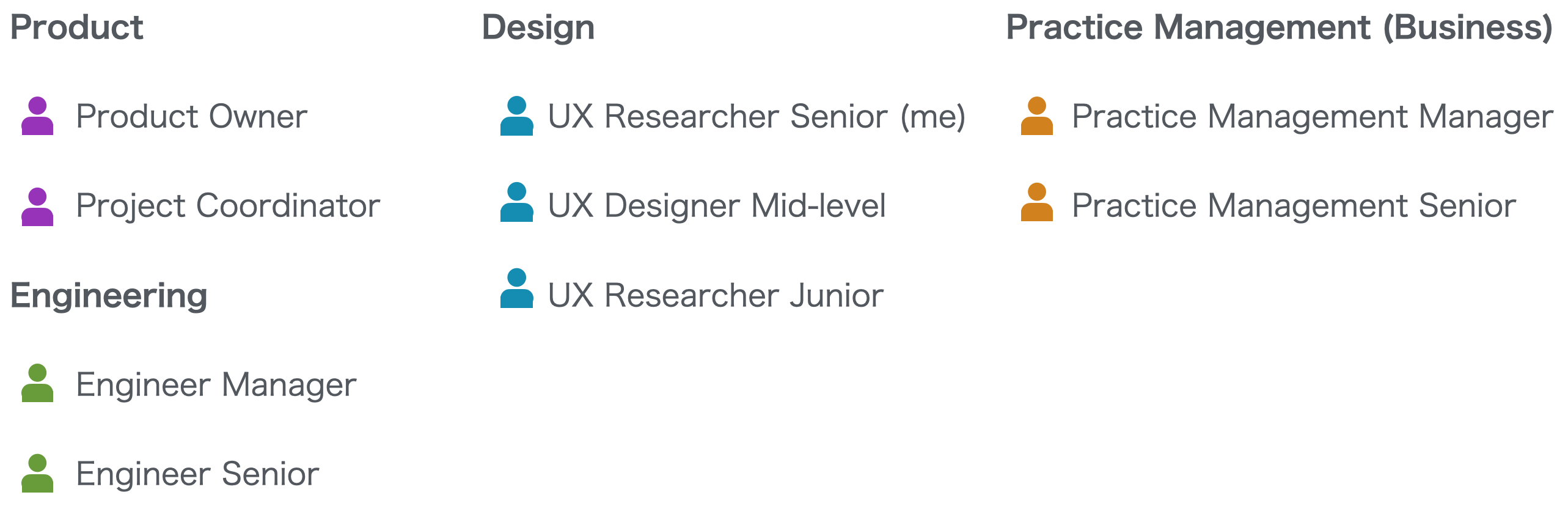
We operated within a "Quad" structure, ensuring tight alignment between Business, Product, Design, and Engineering. This collaborative model allowed us to pressure-test research findings against technical feasibility and business viability in real-time.
My Role & Responsibilities
I spearheaded the early stages of the project to get the project headed in the right direction.
The Process
Our process first focused on understanding the problem, develop solutions to that problem, then test the solution. And repeat any steps to develop high confidence for the MVP release.
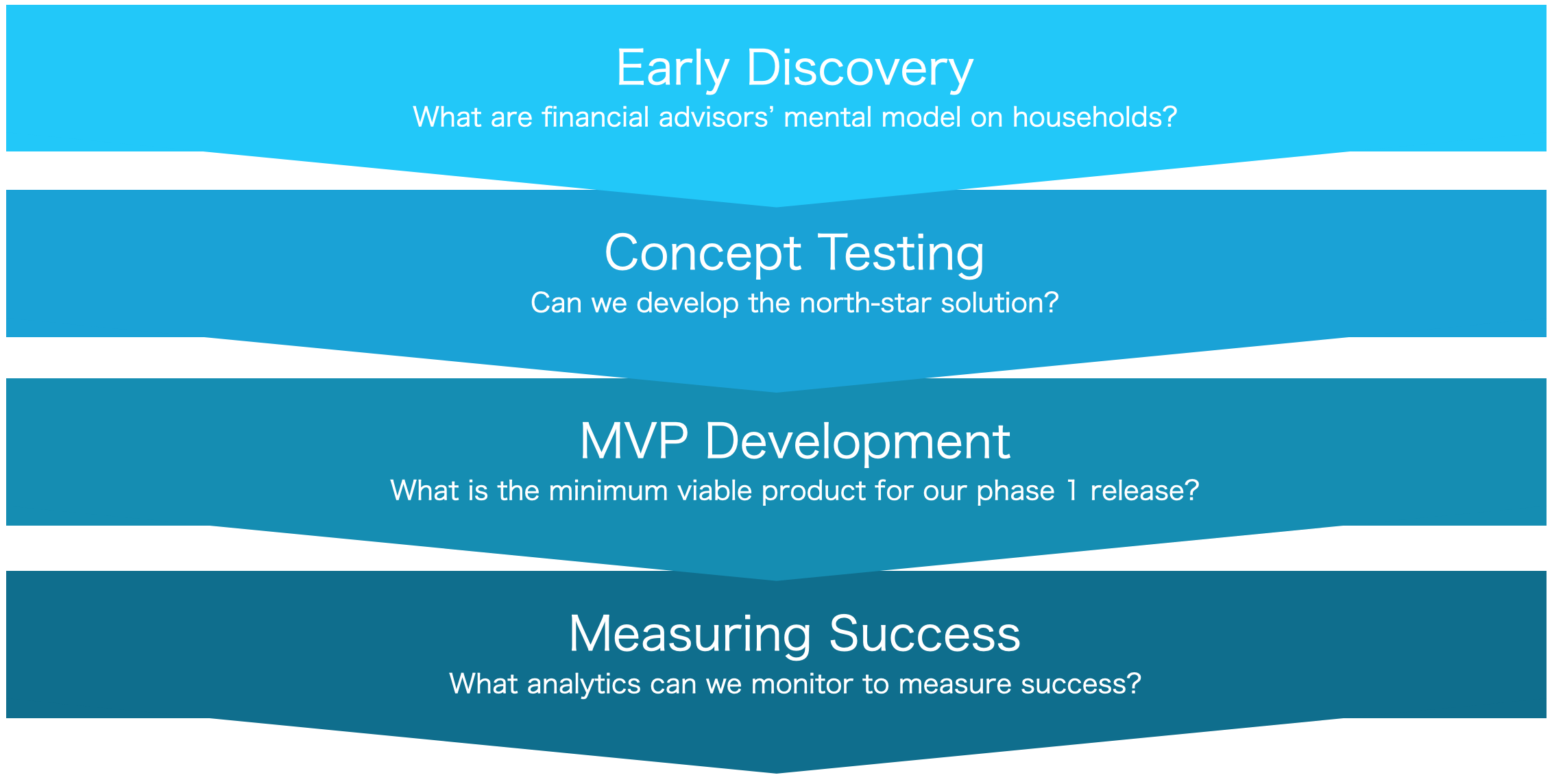

Early Discovery
I conducted the early discovery research and we wanted to learn:
We learned
There are 3 spheres of a household, and the household tool needs to account for these 3 spheres of a household.
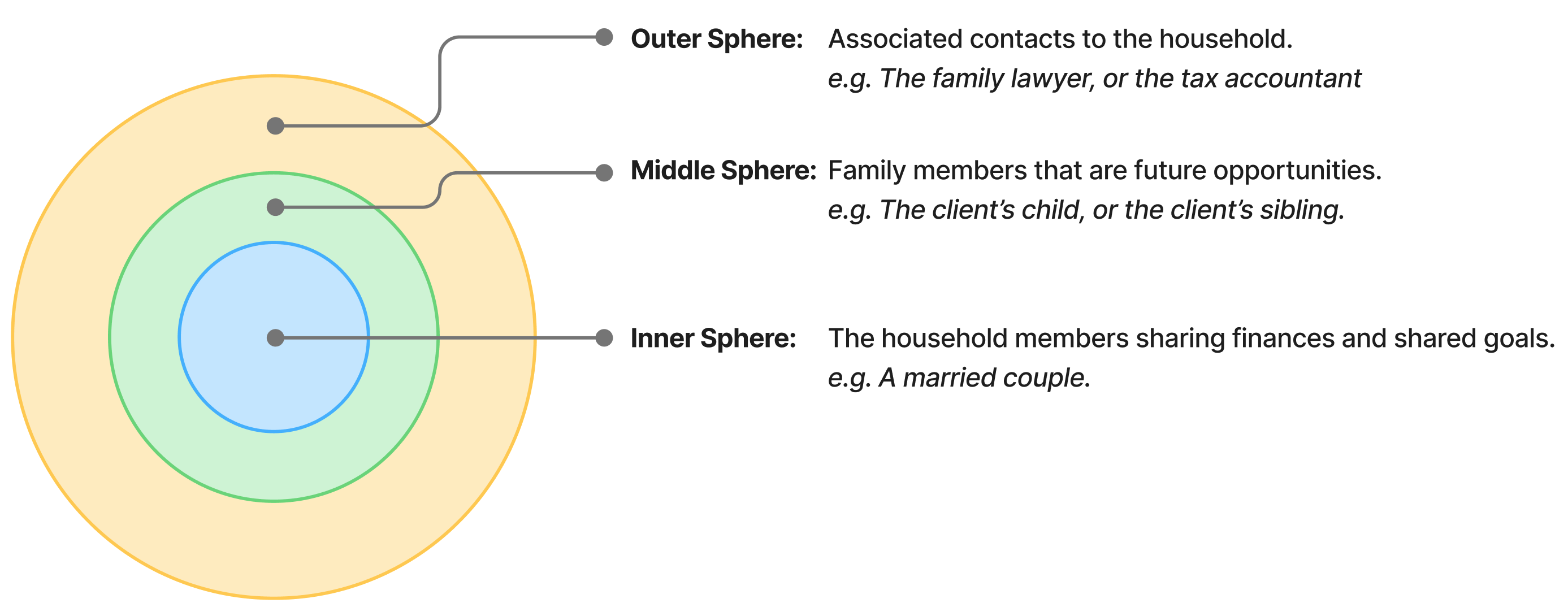
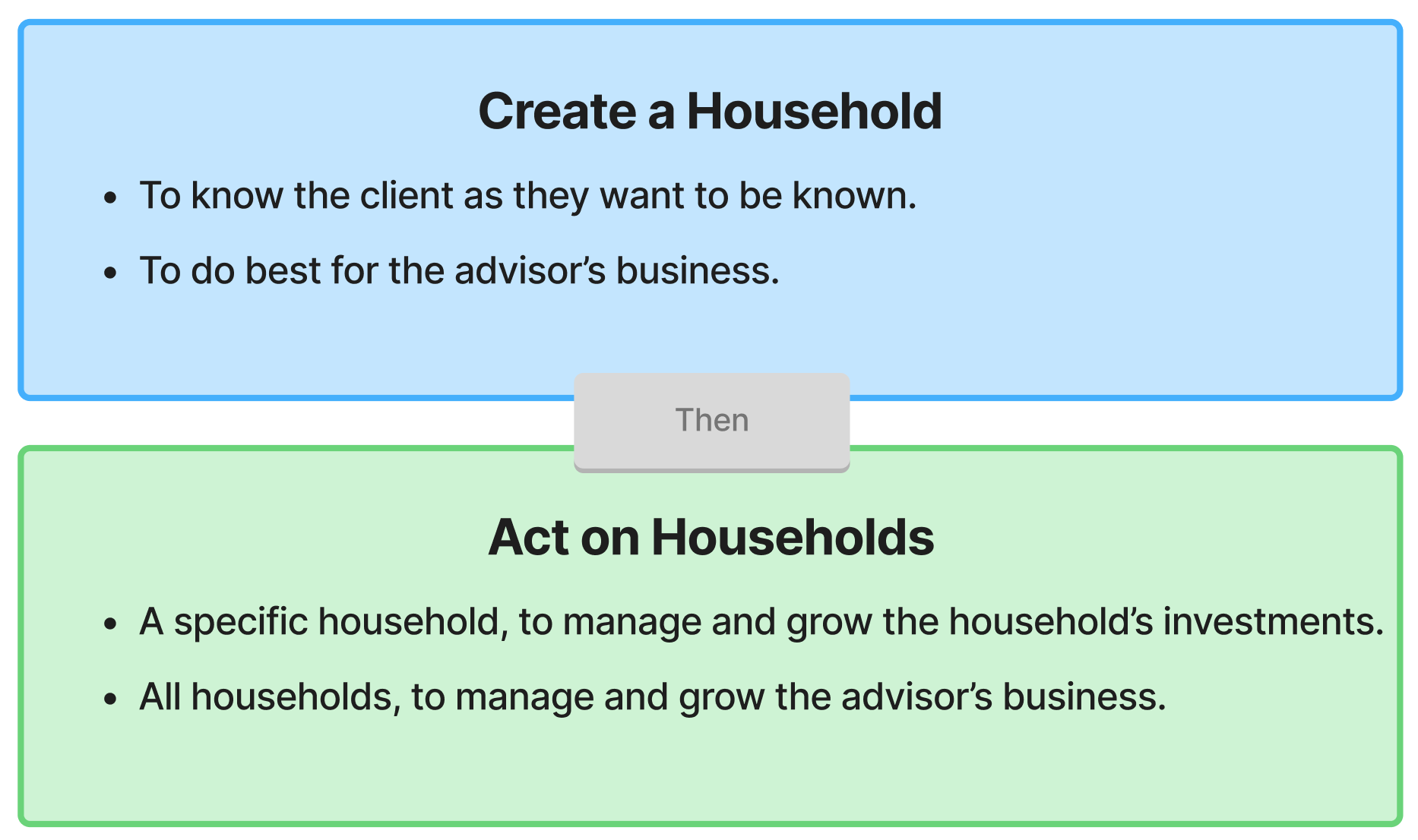
Framework
I developed a framework for the quad to outline the clear intent of the household tool.
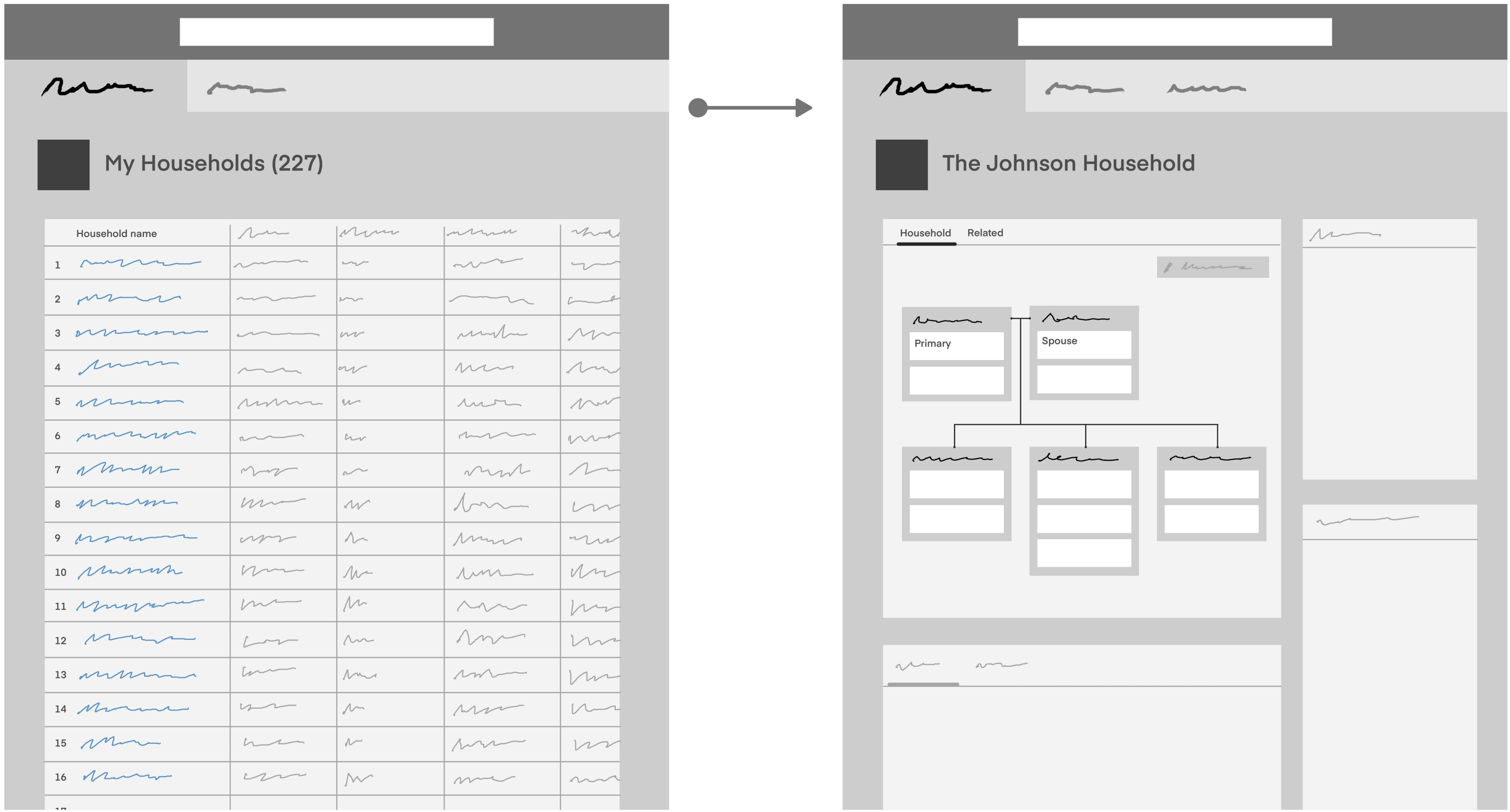
Low Fidelity Concept Testing
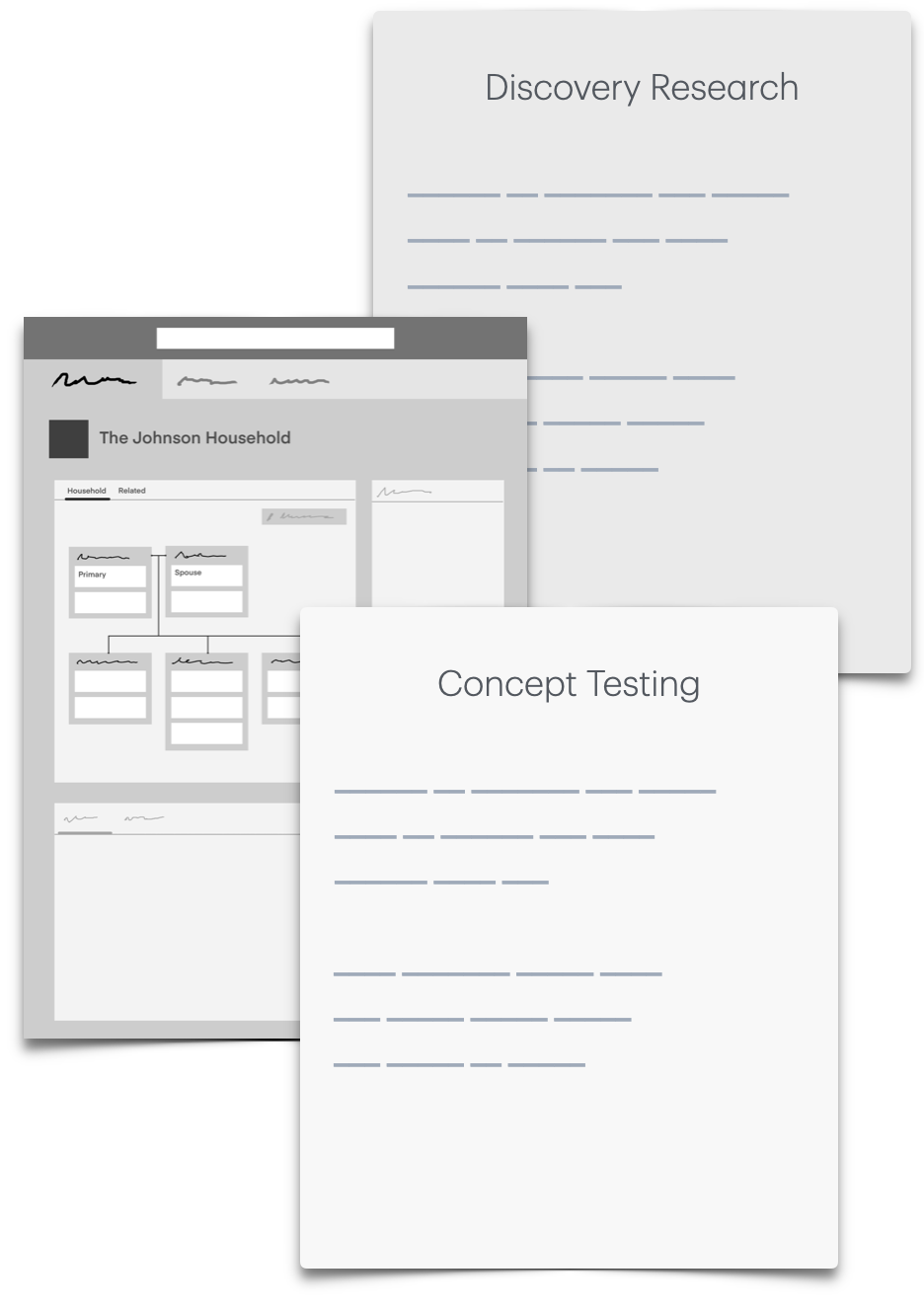
I designed the early concepts of the household tool. As a quad (business, product, engineering, and design) we collaborated on the solution based on the research interviews with financial advisors.
I tested those concept designs to learn:
Flow Map
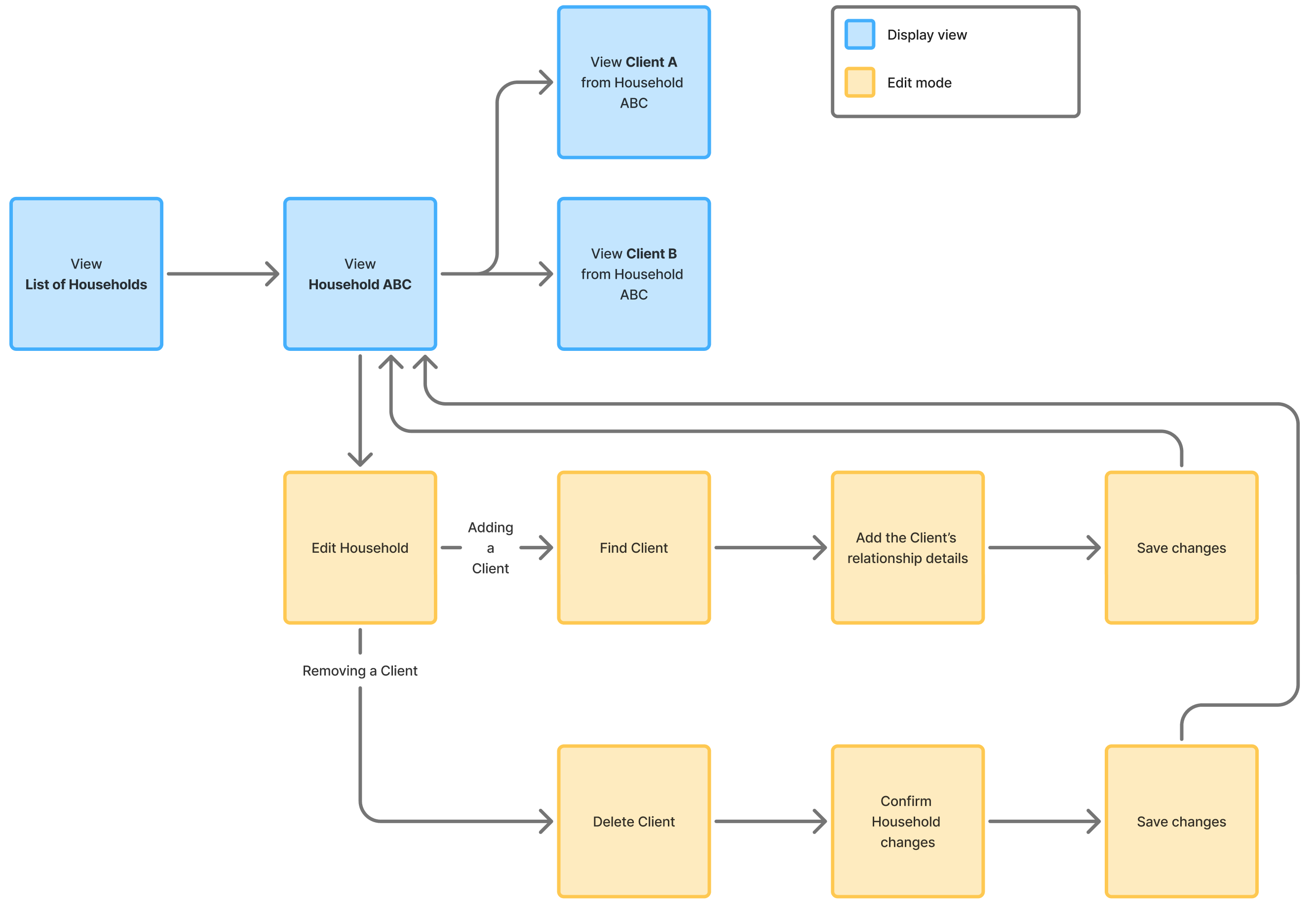
I created a flow map to identify all of the scenarios and the steps in each scenario.
MVP Development
We assigned a UX designer to the project. She took ownership of the final design work. She worked with the quad (business, product, and engineering) to design the MVP. She also worked with the Design Systems team to match the design library.
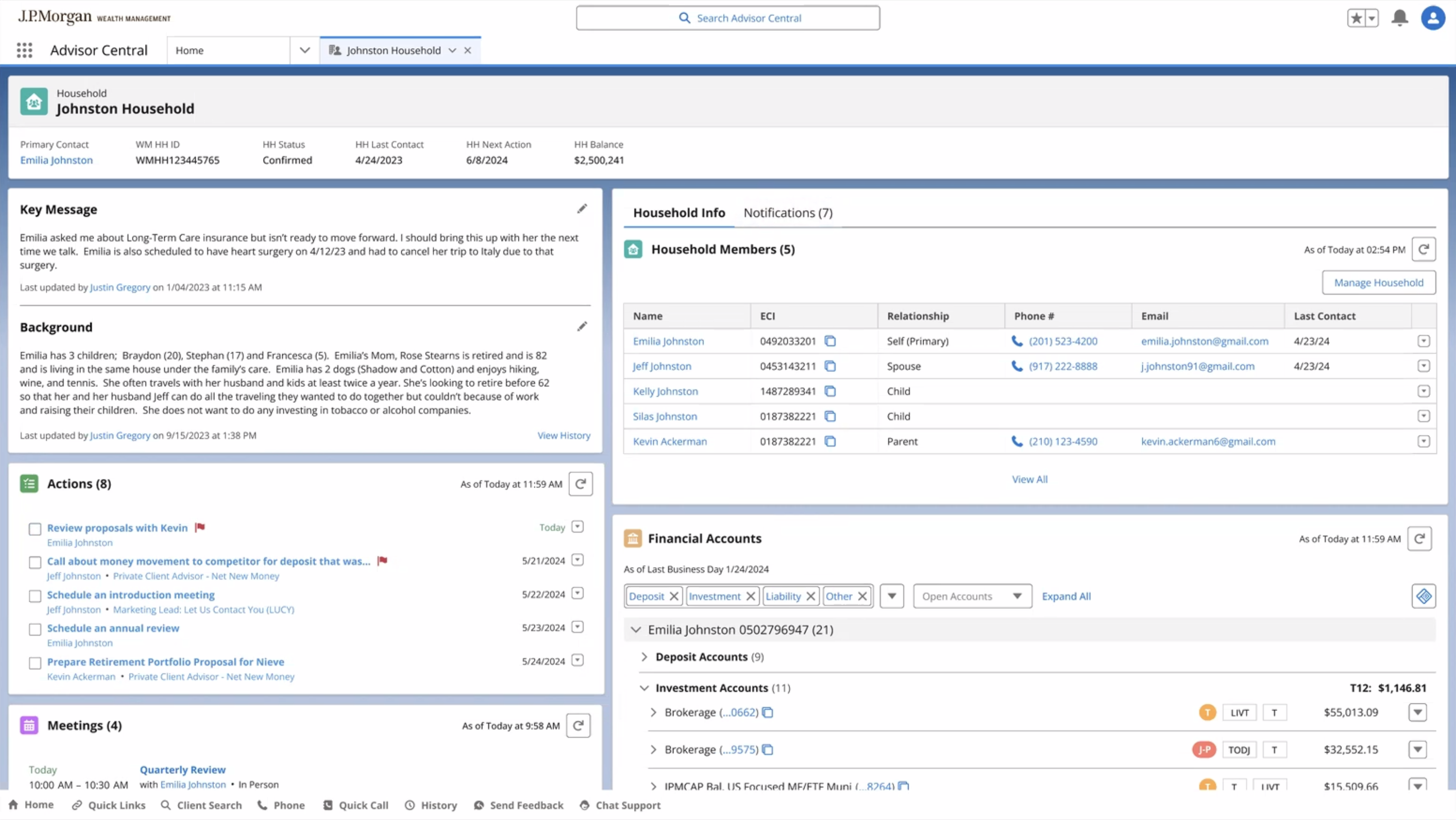
Measuring Success
As the solution moves into development for a 2025 release, we have established a framework to monitor adoption and behavioral impact: