The Financial Advisor Ecosystem Playbook
Building a foundational source of truth for product teams.
The Financial Advisor Ecosystem Playbook
Building a foundational source of truth for product teams.
At a Glance
Project Name: “The Financial Advisor Ecosystem Playbook”
| Challenge | Product teams were operating in silos, lacking a unified understanding of the distinct needs across different advisor lines-of-business. This knowledge gap led to inconsistent designs and redundant, costly discovery efforts for every new project. |
|---|---|
| Outcome | Developed a comprehensive "Ecosystem Playbook" that codified the nuances of each business line. This strategic resource transformed how product teams approach design thinking and serves as the definitive foundational reference for the organization. |
| My Role | Lead UX Researcher |
| Timeline | 2 weeks per study, iterative over 9 months. |
| Methods | Stakeholders Interviews, Secondary Research, Shadowing End-User |
| Impact | Eliminated redundant discovery research for new workstreams; established as the primary onboarding resource for product teams. |

Business Context
Financial advisors help clients achieve their long-term goals by investing their assets.
A client is a Chase customer who invests their money with a Chase financial advisor.

Challenge: Product had no visibility to its users
Within a complex organization like J.P. Morgan Chase, product teams lacked a unified, high-level view of the financial advisor ecosystem. This fragmentation created critical knowledge gaps in two key areas:
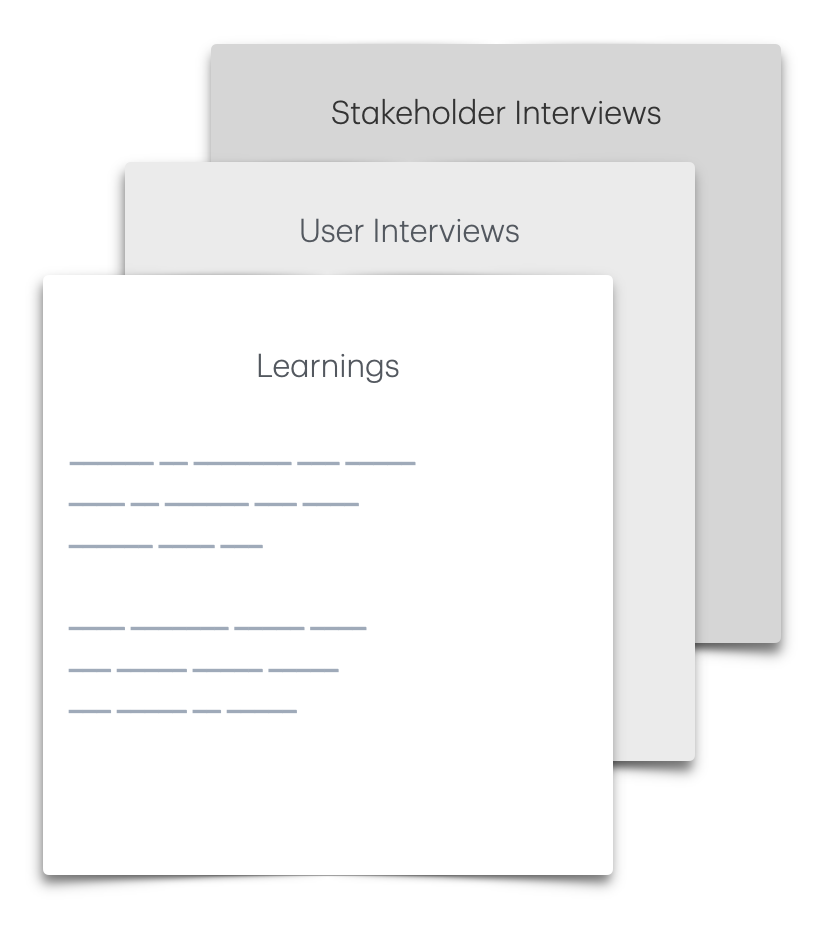
My Role & Responsibilities
As the Senior UX Researcher, I spearheaded this foundational initiative while maintaining a full pipeline of active research studies. My responsibilities included:
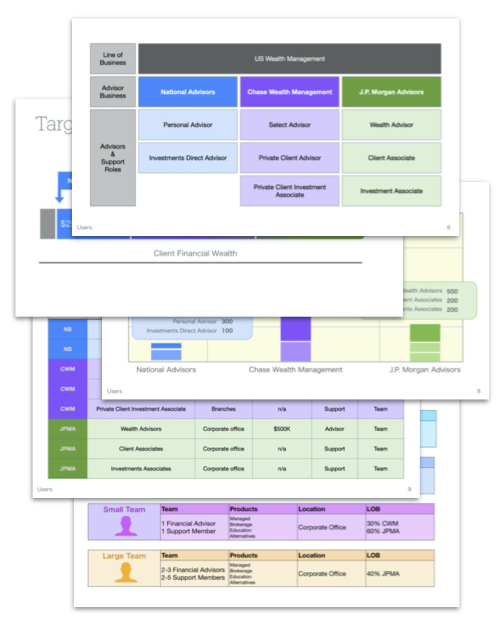
The Deliverable
I synthesized my findings into a comprehensive foundational deck that serves as the organization’s "Source of Truth." The financial advisor's playbook components included:
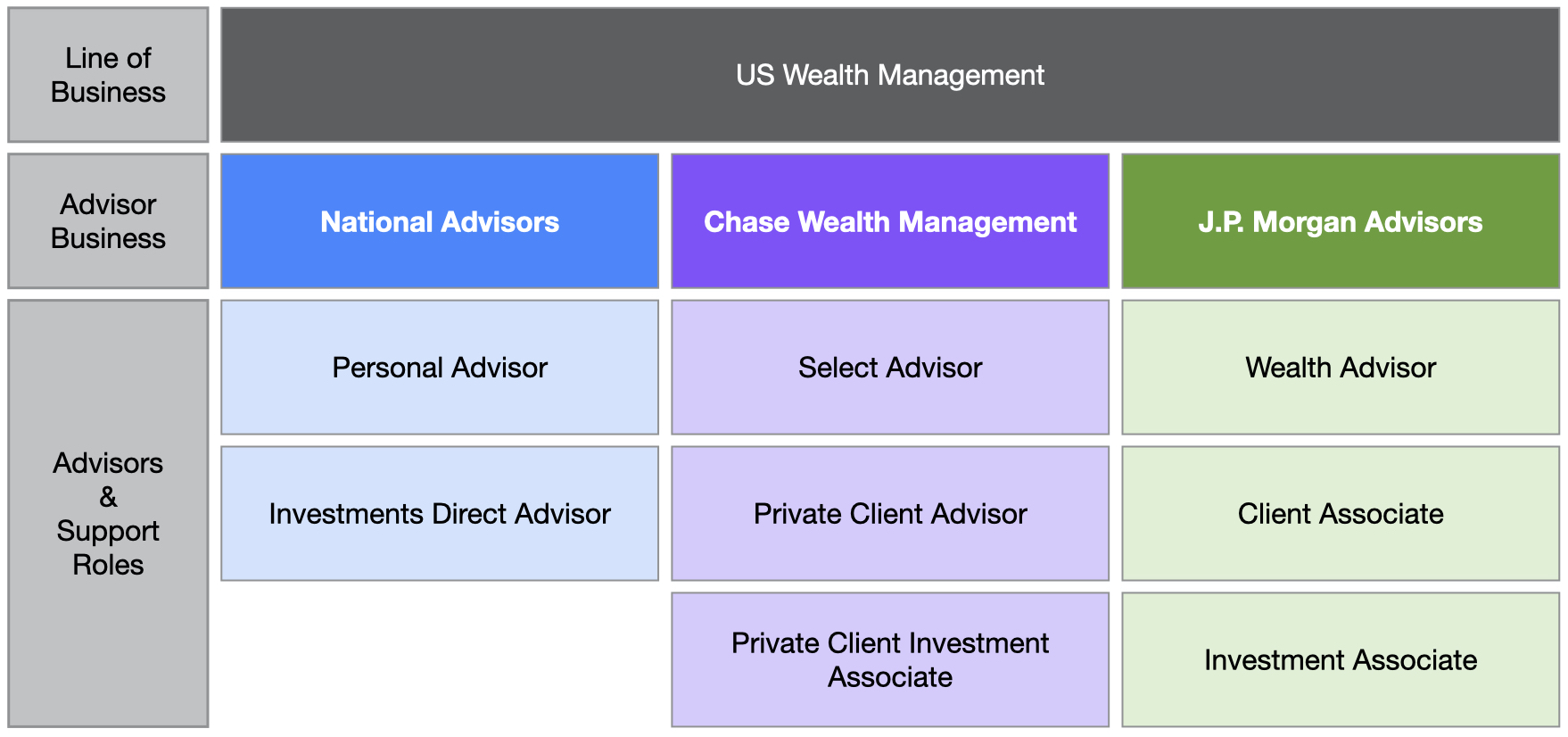
Line of Business
I mapped the Chase Wealth Management ecosystem to clarify the hierarchy between business channels and their specific advisor roles. This visual served as the foundational blueprint for product teams to identify primary and support users accurately.
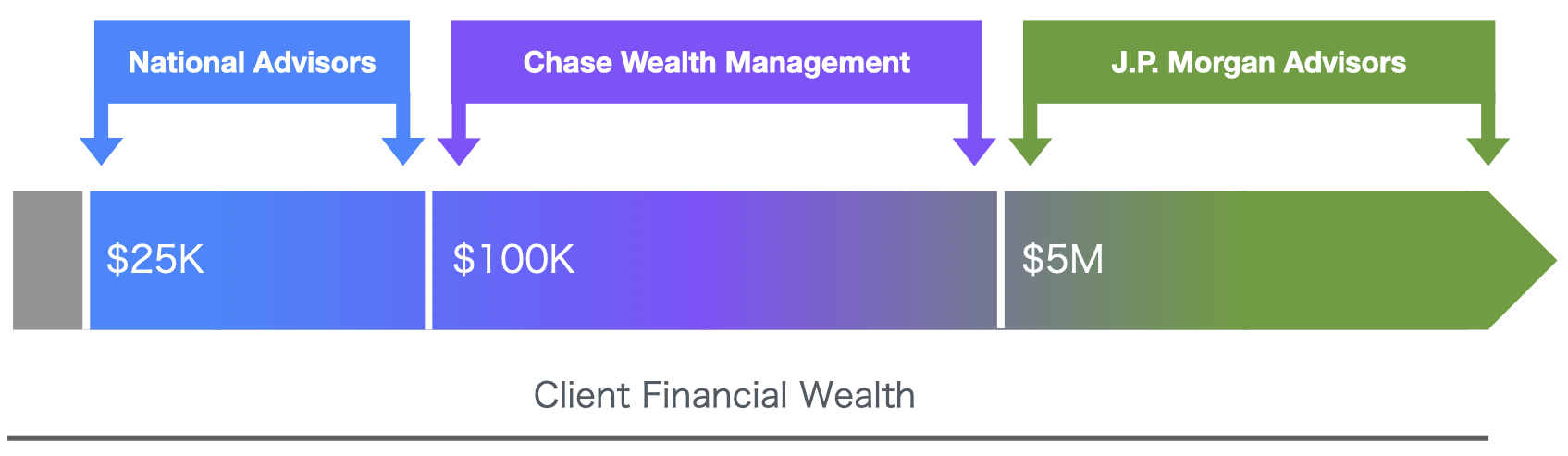
Target Market
This visualization maps the target demographics for each advisor channel, highlighting how they collectively provide end-to-end market coverage. By identifying these segments, I helped product teams visualize the "full-spectrum" strategy, ensuring our digital solutions addressed every customer tier without gaps in service.
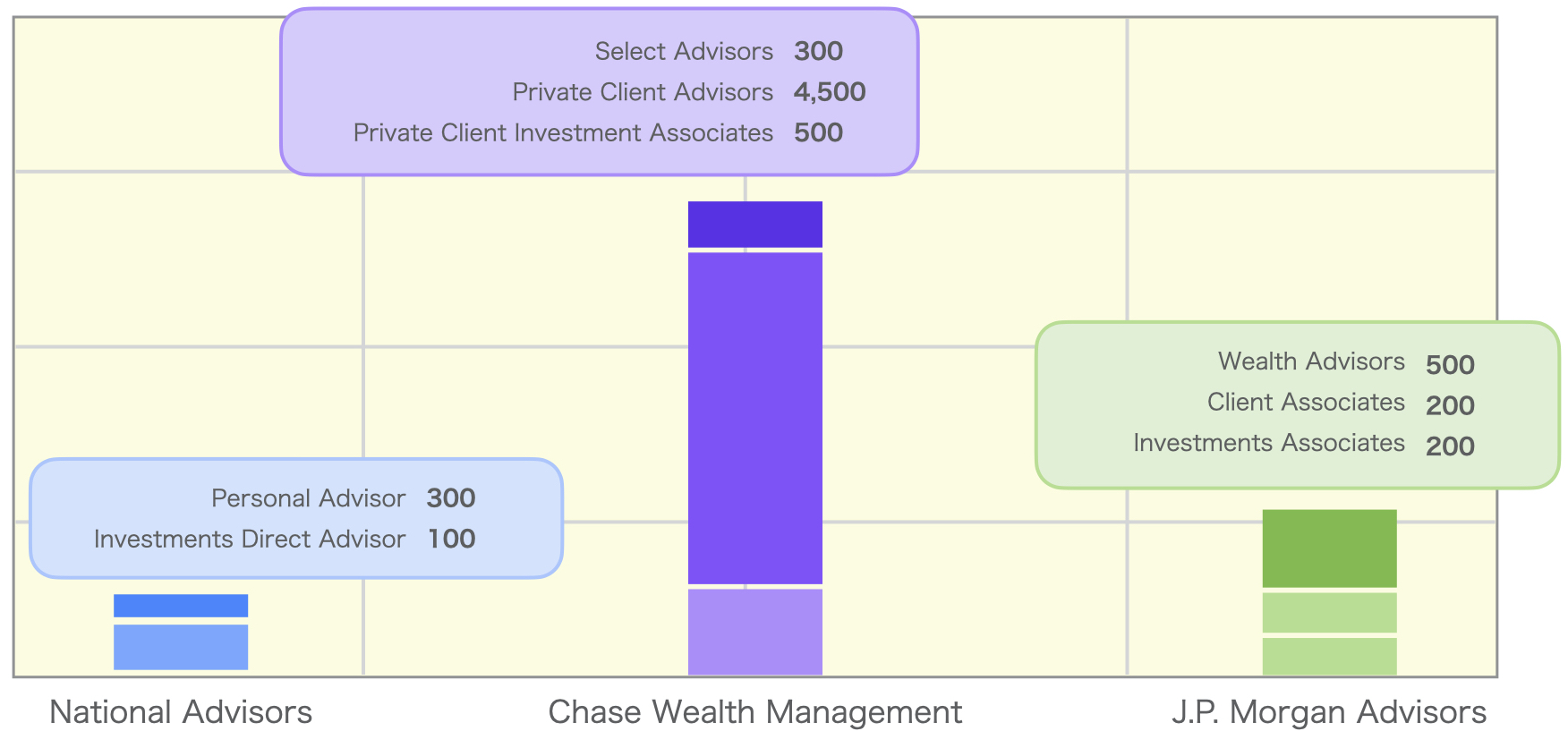
Number of Roles
This headcount distribution chart visualizes the scale of each advisor role across the organization. By quantifying the user base, I enabled product teams to prioritize features based on reach and align their roadmaps with the firm’s projected workforce growth.
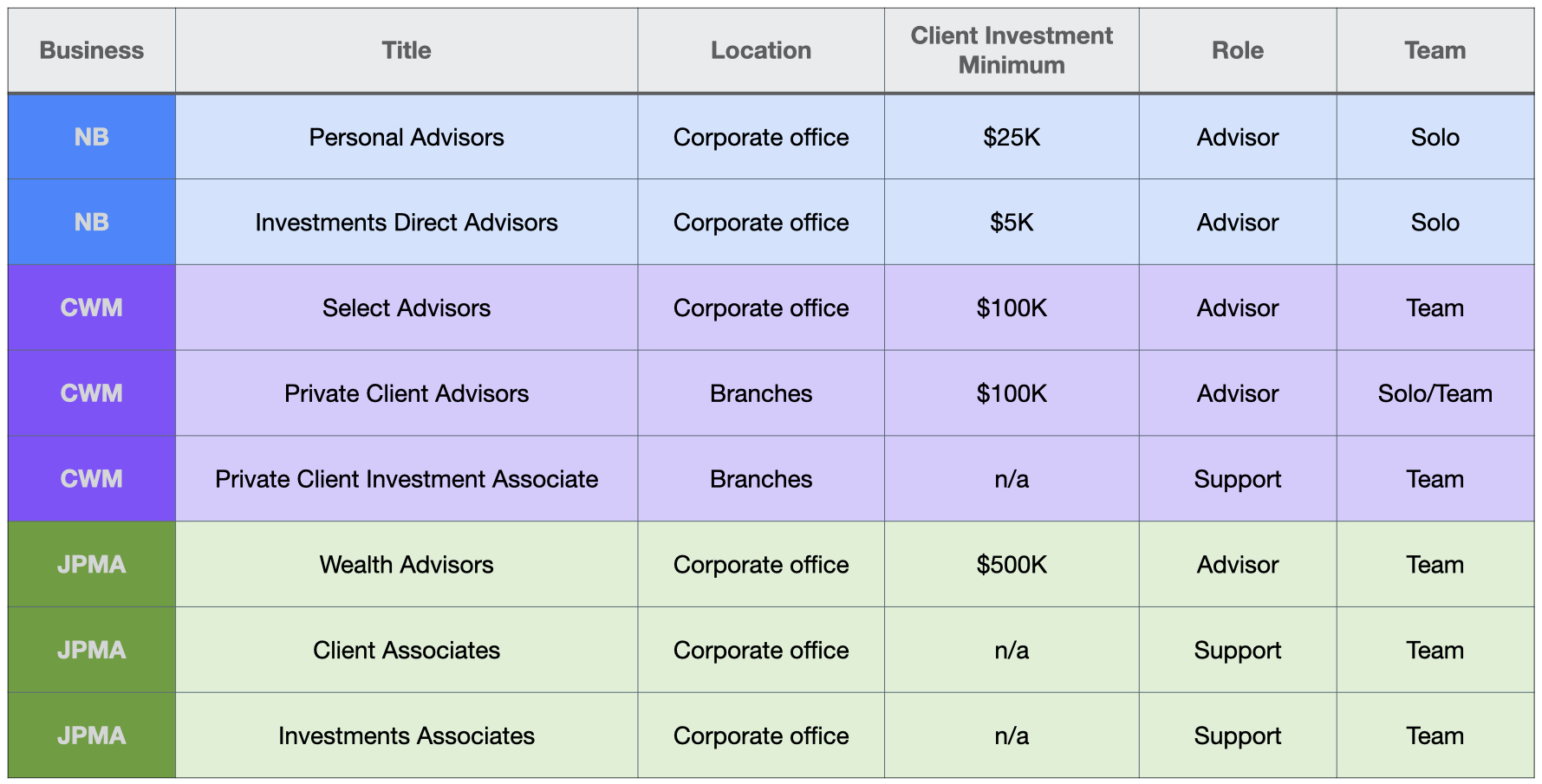
Business & Roles
This comparative matrix outlines the operational constraints of each role, including physical location and client investment thresholds. By clarifying these distinctions, I helped teams identify the specific environmental and financial contexts in which our users operate.
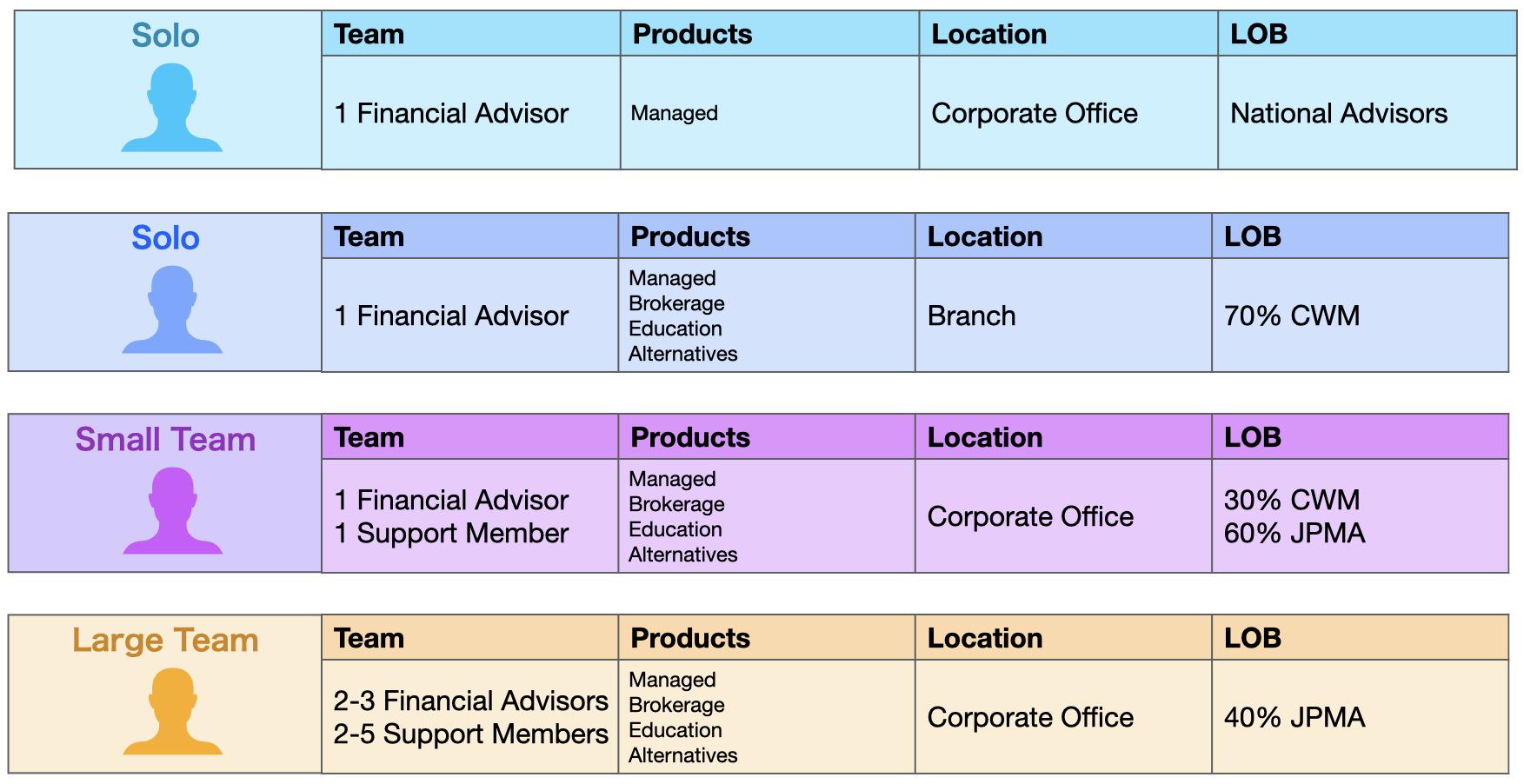
Solo vs. Team
I categorized our workforce into four distinct advisor archetypes based on product access and team structure. By defining these solo and team-based dynamics, I enabled designers to build scalable features that support both independent workflows and high-volume, collaborative environments.
The Impact
This has helped everyone by,