The Deepening Framework

Driving "Share of Wallet" through automated contact strategies.


At a Glance

Project Name: “The Financial Advisors’ Deepening Framework”

Challenge Financial advisors lacked a systematic contact strategy, making it difficult to consistently identify and pursue relationship-deepening opportunities within their book of business.
Outcome Designed and integrated a strategic contact strategy tool within the CRM that provides data-driven prompts for advisor-client engagements.
My Role Lead UX Researcher
Timeline 2 weeks per study, iterative over 9 months.
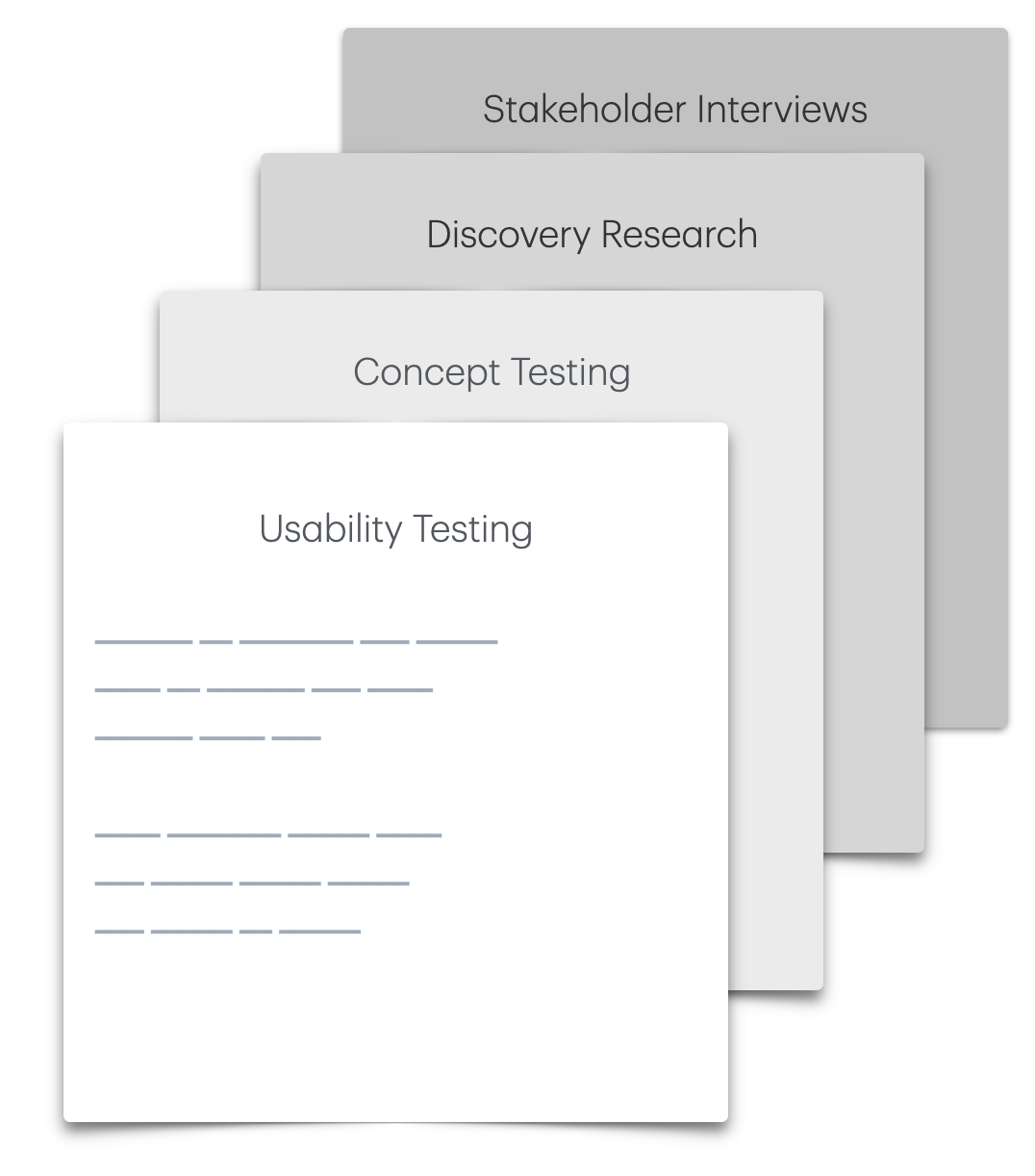
Methods Stakeholder Interviews, Multi-phase Discovery, Workshop with Users, Concept Validation, and Usability Testing
Impact Achieved 53% adoption within 3 months of launch, with consistent 5–10% quarterly growth thereafter.

Business Context

Financial advisors help clients achieve their long-term goals by investing their assets.
A client is a Chase customer who invests their money with a Chase financial advisor.

  • J.P. Morgan Chase employs over 5,000 financial advisors.
  • They serve over 2.8 million households.
  • They manage over $1 trillion in assets under supervision.


Challenge

My team was tasked with improving the "Deepening" experience within the CRM, yet the term remained an ambiguous business concept. As the lead researcher, I was responsible for transforming this high-level objective into actionable product goals by answering several key questions:

  1. Definition: What does "Deepening" actually mean for a financial advisor’s day-to-day client management?
  2. Gap Analysis: Where do current CRM tools fail to support advisor efforts to strengthen client relationships?
  3. Opportunity Identification: Which high-impact features are missing that would allow advisors to move from transactional to strategic interactions?


The Quad

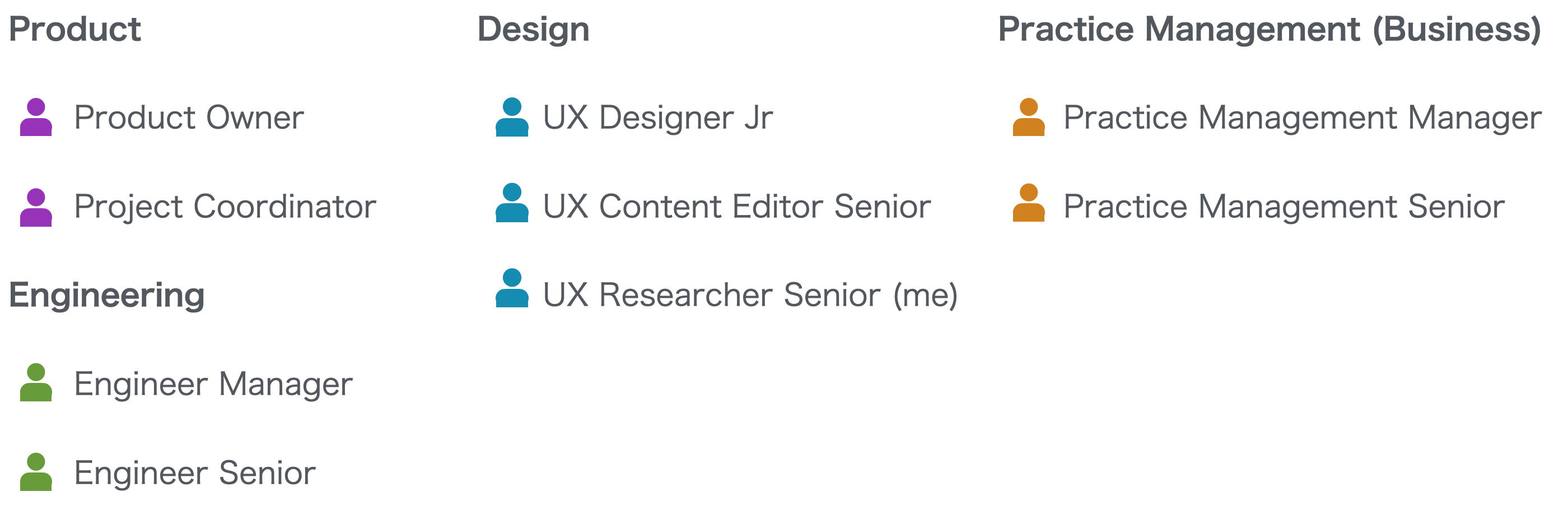
I operated within a dedicated "Quad" structure, ensuring tight alignment between Product, Design, Engineering, and Business stakeholders. This collaborative model allowed us to pressure-test research findings against technical feasibility and business viability in real-time.
My Role & Responsibilities

As the Senior UX Researcher, I led the end-to-end research strategy to transform an ambiguous business goal into a tangible product feature. My responsibilities included:
  • End-to-End Strategy: Architected the research roadmap, spanning from initial discovery and generative studies to final evaluative testing.
  • Insights Democratization: Executed all research phases and facilitated cross-functional workshops to align the Quad on key findings.
  • Strategic Facilitation: Led discussions within the Quad to ensure research insights directly informed product requirements and engineering priorities.
  • Mentorship: Guided the project’s junior designer, fostering a research-led design process and ensuring high-quality UX outcomes.


The Business Goal

Through stakeholder interviews, I decoded the "Deepening" objective into clear, quantifiable business targets and identified the behavioral drivers needed to reach them:
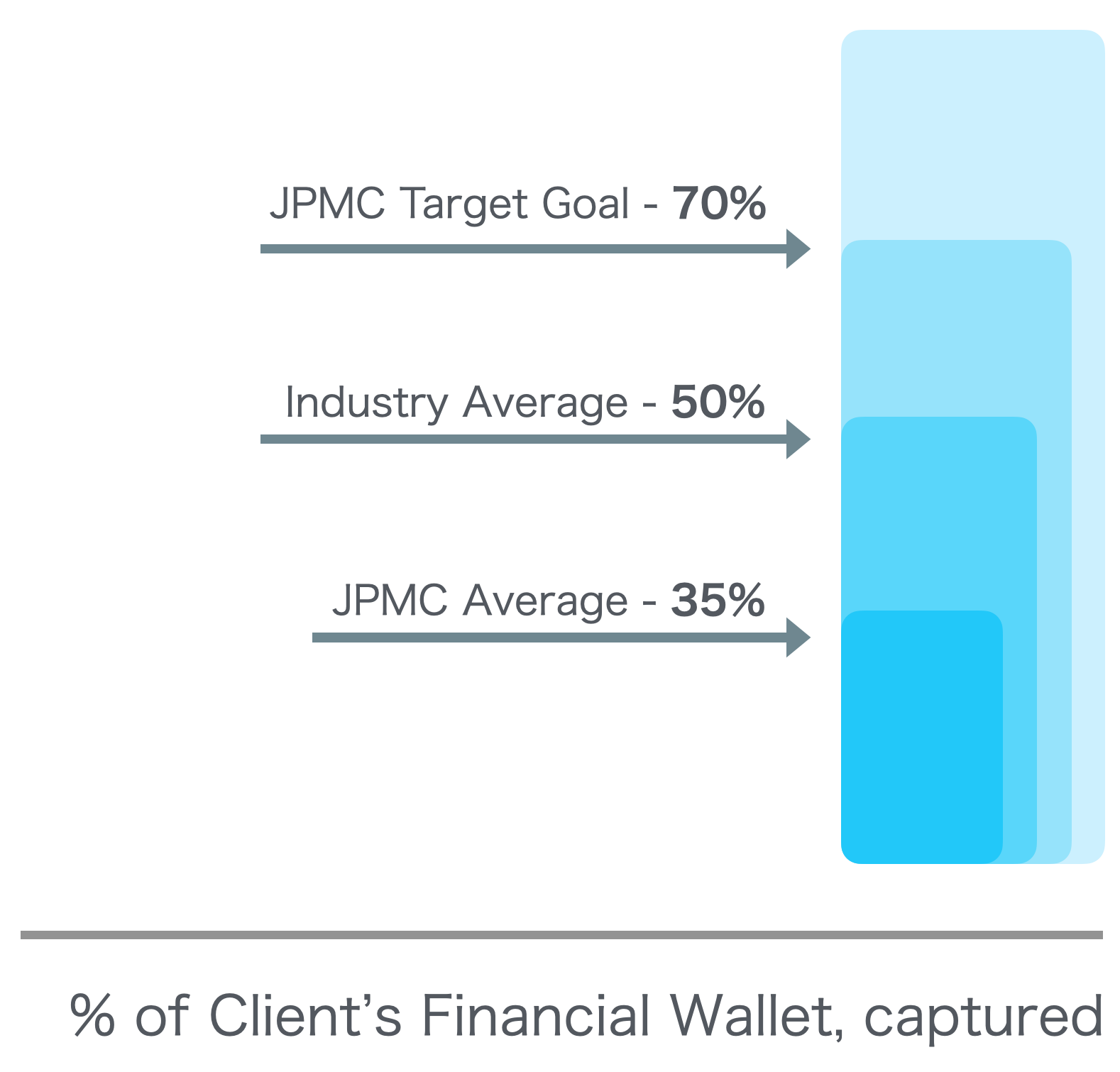
  • The Growth Gap: Our advisors averaged 35% share of wallet, while the industry average sat at 50%. Leadership set an aggressive target of 70%.
  • The Trust Factor: Research confirmed that "Deepening" is a byproduct of trust, which is built through a consistent, disciplined Contact Strategy (routine client check-ins).


Identifying the User Problem

To bridge the gap between business goals and advisor reality, I conducted deep-dive interviews to audit the current workflow. I uncovered a critical lack of tooling that forced advisors into inefficient behaviors:

  • The Tooling Gap: The CRM lacked a dedicated Contact Strategy feature, leaving advisors with no standardized way to manage client outreach cadences.
  • The "Work-around" Culture: Advisors had improvised manual systems using the "Tasks" and "Lists" features, which were not designed for long-term relationship management.
  • Strategic Path to Adoption: I identified that for the new tool to be successful, it needed to mirror the "Task/List" mental models advisors already used, ensuring a low-friction transition to the new habit.


Competitive Analysis

We conducted a competitive audit of industry-leading CRM platforms to identify standard features and best practices for relationship management. Two critical patterns emerged:

  • Strategic Segmentation: Top-tier tools inherently link client segmentation to outreach frequency (e.g., Tier 1 clients automatically triggering quarterly touchpoints).
  • Touchpoint Customization: Leading platforms offer granular flexibility, allowing advisors to override default cadences based on individual client preferences.
  • The Verdict: This audit confirmed that our lack of a native contact tool was a significant competitive gap that hindered our advisors' ability to maintain industry-standard service levels.

Contact Strategy Framework

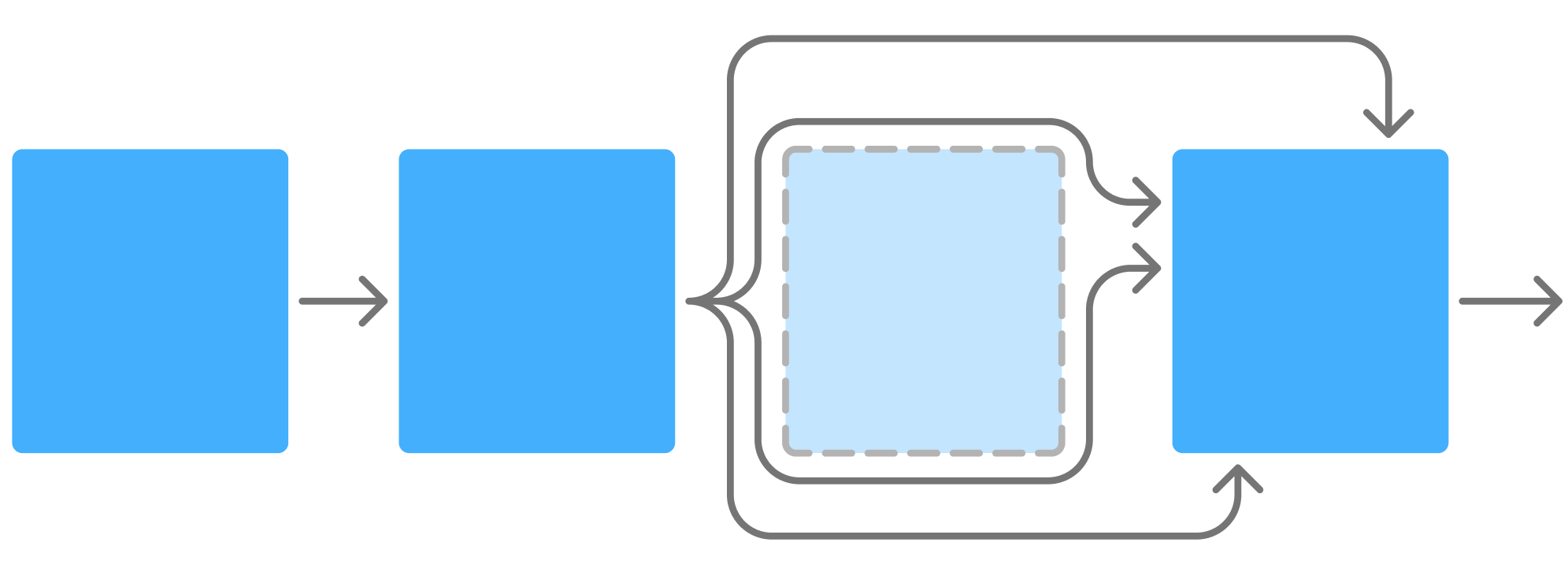
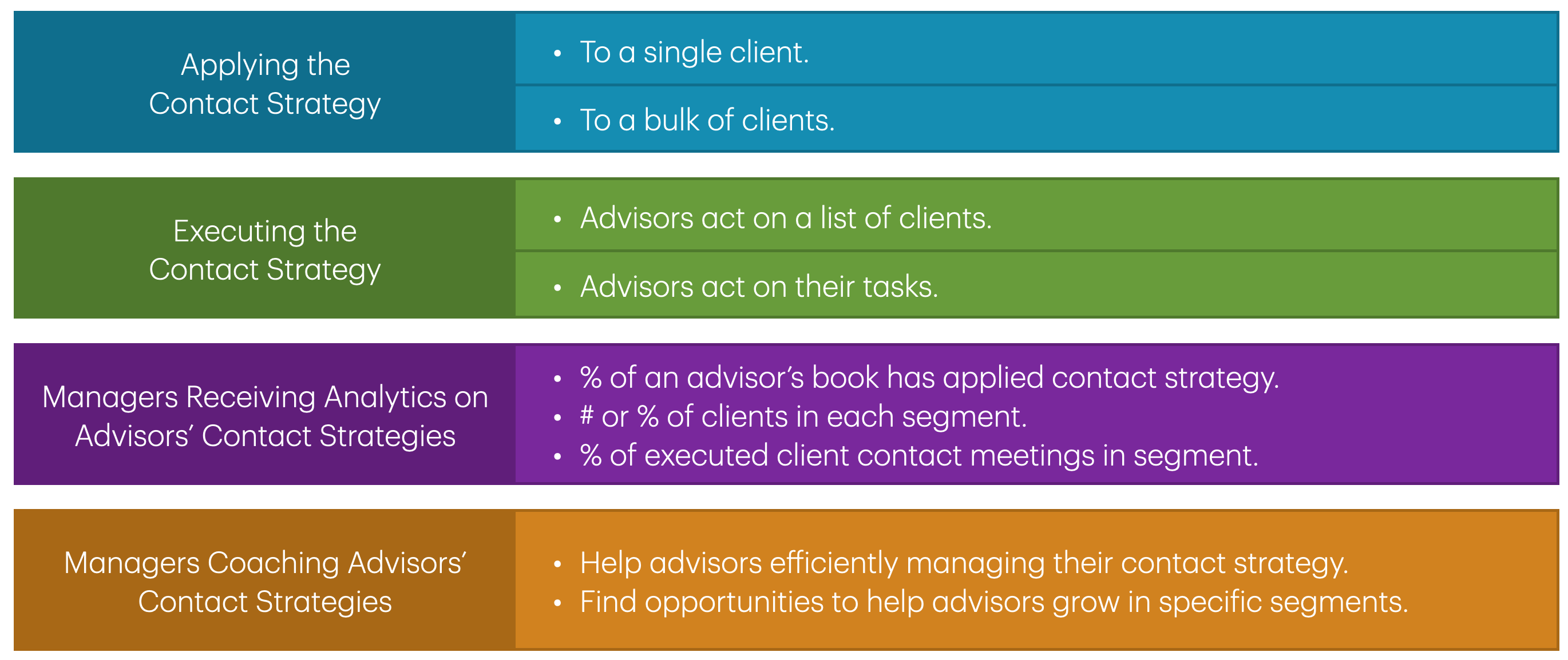
To ensure a cohesive end-to-end experience, I developed a strategic framework that mapped the lifecycle of a contact strategy. This blueprint served as the foundation for the design team, aligning the Advisor’s workflow with Managerial oversight.
Designing a Solution

Based on the developed framework, the design team built a native Contact Strategy solution allowing advisors to assign clients to specific segments with automated, recurring touchpoints. I led the validation of this tool through two critical phases:
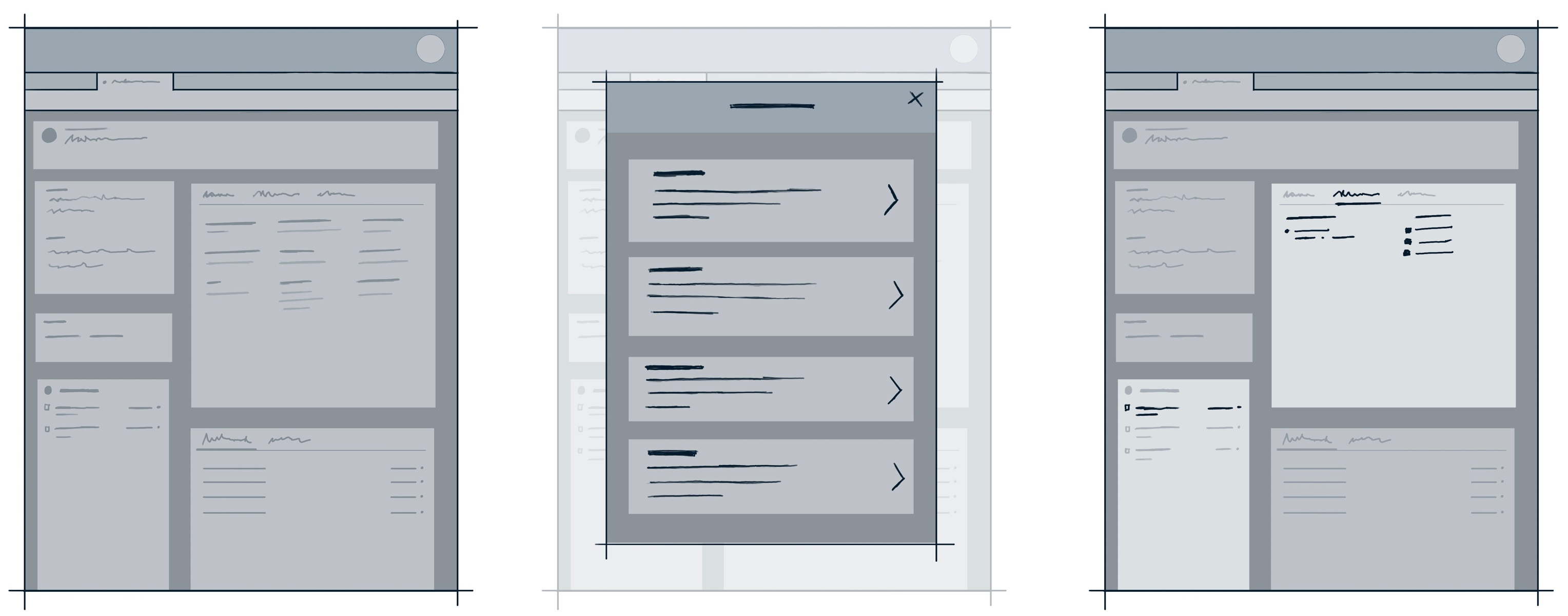
  • Concept Testing: Confirmed that the automated "tier-based" logic aligned with advisor mental models and business objectives.
  • Usability Testing: Identified and resolved navigational friction, ensuring the transition from manual work-arounds to the new system was intuitive and low-effort.

Value Proposition

The Contact Strategy tool moved the organization from fragmented, manual processes to a unified, data-driven system. The core value of this solution included:

  • Standardization at Scale: Established a consistent, firm-wide methodology for client deepening, ensuring every advisor follows a proven outreach cadence.
  • Operational Efficiency: Minimized human error and administrative mental load by automating next-steps and recurring reminders.
  • Strategic Segmentation: Enabled precise relationship management by applying contact logic at both the individual client and household levels.
  • Performance Transparency: Created a new data layer for leadership, providing managers with the visibility needed to offer objective, high-impact coaching.

Measuring Success

The product and engineering team released the MVP to a pilot, then release the MVP to all financial advisors in Q1 2026.

  • Pilot Group: Released the MVP to a dedicated pilot group in Q4 2025 to proactively identify technical and usability issues prior to scale.
  • General Release: After releasing the MVP product to all financial advisors, we tracked 63% adoption after 3 months.
  • Future releases: To drive adoption past our 90% target, we established continuous feedback loops with advisors to isolate and prioritize subsequent feature enhancements.